Showing posts with label Abstract Expressionism. Show all posts

Saturday, May 4, 2013

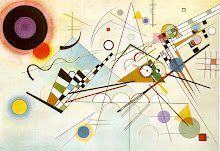
Wassily Kandinsky (December 16, 1866 – December 13, 1944) II


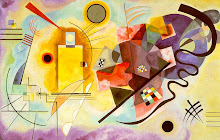
Almost Submerged

1930

"Painting is an art, and art is not vague production, transitory
and isolated, but a power which must be directed to the
improvement and refinement of the human soul–to, in fact, the
raising of the spiritual triangle.

If art refrains from doing this work, a chasm remains unbridged,
for no other power can take the place of art in this activity.
And at times when the human soul is gaining greater strength, art
will also grow in power, for the two are inextricably connected
and complementary one to the other. Conversely, at those times
when the soul tends to be choked by material disbelief, art
becomes purposeless and talk is heard that art exists for art's
sake alone."

– Wassily Kandinsky


Park of St. Cloud with Horseman

1906


Park St. Cloud in Autumn

1906 


White Sound

1908 


Binz on Rügen

1901


Kochel - Lady Seated by the Lakeside

1902 


Shallow-Deep

1930 


Moonlit Night

1907 


Kochel Waterfall II

1902 

Sunday, April 21, 2013

Roberto Matta (November 11, 1911 – November 23, 2002)


The Earth is a Man

1942

Roberto Matta was a painter who constantly married Surrealism with Abstract Expressionism to quite a high level of success. His works are strange and ethereal, often featuring cloudy emanations of colors. And Dalí seems to have had a strong influence on Matta's paintings, especially in their compositional schemes, which I think is interesting as a reference within the works, but also somewhat damaging, as Dalí is often faulted for the composition of his elements.

It's also interesting to note Roberto's relationship with Arshile Gorky, one of the painters of the twentieth century with the most tragic life. Matta had had an affair with Gorky's wife, who afterwards left Gorky. As Gorky put it, "I made a terrible mistake getting in with these Surrealist people. They're terrible people. The husbands sleep with each other's wives and they're terrible people." Gorky soon after hanged himself, which is something a large part of the Abstract Expressionist movement of the time blamed Matta for. 


X-Space and the Ego

1945


Water

1939


The Day is an Attack

1942


A Grave Situation

1946


Years of Fear

1941

Sunday, May 15, 2011

Joan Miró (April 20, 1893 – December 25, 1983)

                                                                                                     
Standing Nude
1918

Miró is the best known Surrealist after Dalí (interestingly both were Catalan), though some supposed him to be the best. Personally, his most famous periods, which tended towards Surrealism and Abstract Expressionism, are not as interesting to me as his earlier ones. The piece above, which is Fauvist, is absolutely my favorite on this post; I should come clean that I love Fauvism in general, so it tilts my objectivity. As for his Surrealism, I've never heard a better explanation than his; "The spectacle of the sky overwhelms me. I'm overwhelmed when I see, in an immense sky, the crescent of the moon, or the sun. There, in my pictures, tiny forms in huge empty spaces. Empty spaces, empty horizons, empty plains – everything which is bare has always greatly impressed me."

The Tilled Field
1923-1924

Dancer Listening to the Organ Playing in a Gothic Cathedral
1945

The Lane

Man and Woman in Front of a Pile of Excrement
1936

Danger
1925

Self-Portrait
1919

Thursday, May 5, 2011

Mark Tobey (December 11, 1890 – April 24, 1976)

                                                                                                               
Orange Leaves
1965 

Tobey may not be the first person you think of when you muse on Abstraction (it's probably Pollock), but, in my view, Tobey enthused a great deal more spirituality into his works than his contemporaries. In fact, Pollock was somewhat influenced, and not surprisingly when you view his works, by Tobey. Of course, Tobey was one of the eldest Abstractionists about, having been born in the 19th century (thinking about Tobey, I'm a bit reminded of Pissarro, who was the old man of the Impressionist clique, or, if you prefer the Beat Generation writer William Burroughs). I think there's something extremely interesting about those long-lived elder artists that form artistic circles around themselves, because they always tend to have a deep amount of reflection in their works, while working in very modern styles; certainly Tobey seems, to me, to be such an artist. 

Untitled
1957 

Untitled

Edge of August
1953

Untitled
1966

Composition with Yellow Spots
1965

Head
1952

Untitled
1968

Sunday, April 17, 2011

Robert Motherwell (January 24, 1915 – July 16, 1991)

                                                                                                                  
Beside the Sea No. 22
1962

Motherwell was an important voice, as well as hand, in the Abstract Expressionist movement. He was well-known and well-received, and saw himself as a member of an elite group of artists that included Pollock, Rothko and de Kooning. I'll leave you with an interesting quote of his: "The public history of modern art is the story of conventional people not knowing what they are dealing with."

Iberia No. 2
1958

Mallarme's Swan
1944

Cantata No. 13
1960

The Homely Protestant
1948

Lyric Suite
1965

ln Plato's Cave No. 1
1972

Monday, April 4, 2011

Jackson Pollock (January 28, 1912 – August 11, 1956) II

                                                                                  
Convergence
1952

Jackson Pollock is someone I've wanted to re-feature for a while (the first post was a bit austere). He remains an extremely controversial artist, whose critics and fans seem equally zealous in their arguments. And, while we know Pollock mostly for his sort of Abstract Expressionist works (a sub-style often labeled Action Painting or Gestural Abstraction), such as the piece above, he also worked for a long time in Expressionism, largely influenced by Picasso. Lastly, I want to note that his particular style of Abstract Expressionism is very strongly indebted to Kandinsky, but, for some reason, the derivation is barely ever stressed. What do you think of Pollack?

Head
1940-1941

Male and Female
1942 

Composition with Pouring II
1943

Naked Man with Knife
1938-1940

Blue Poles: Number 11, 1952
1952

Woman
1930-1933

Number 14, 1951
1951

Sunday, March 27, 2011

Robert Delaunay (April 12, 1885 – October 25, 1941)

                                                                                                
Circular Forms
1930
Delaunay was one of those turn-of-the-century painters that acted as a midwife for all those wonderful styles that developed in that period. His best known paintings are colorful and full of varying circles, a style no doubt influenced by Kandinsky: Delaunay was a part of the Der Blaue Reiter group.

The City
1911

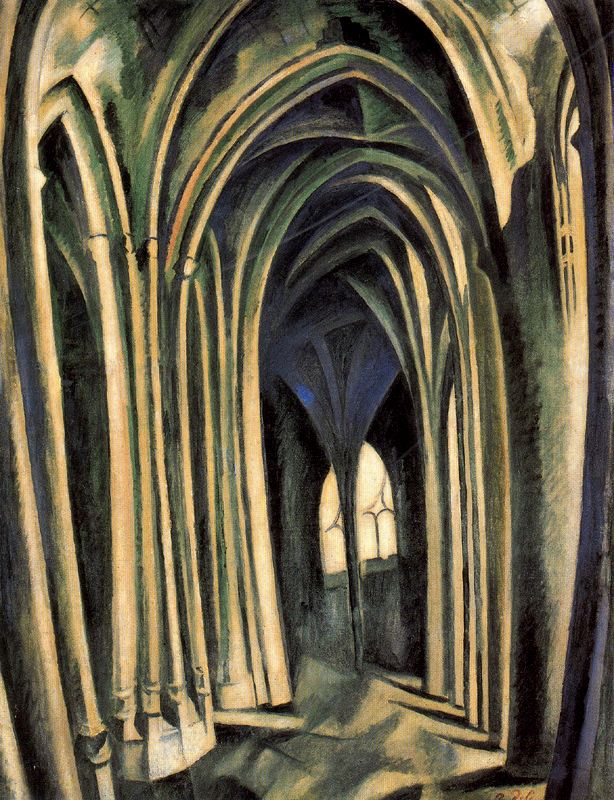
Saint-Séverin No. 3
1909-1910

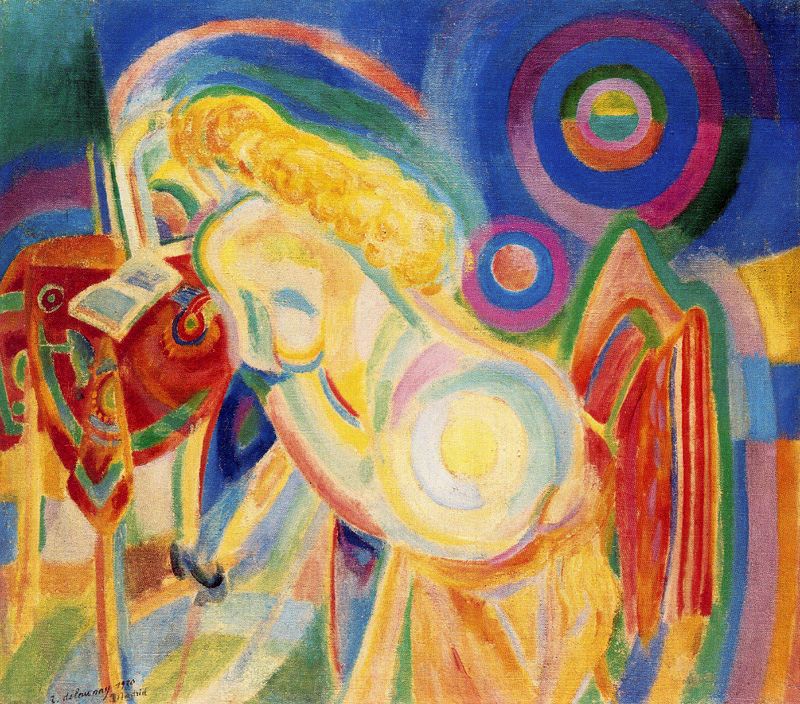
Nude Woman Reading
1920

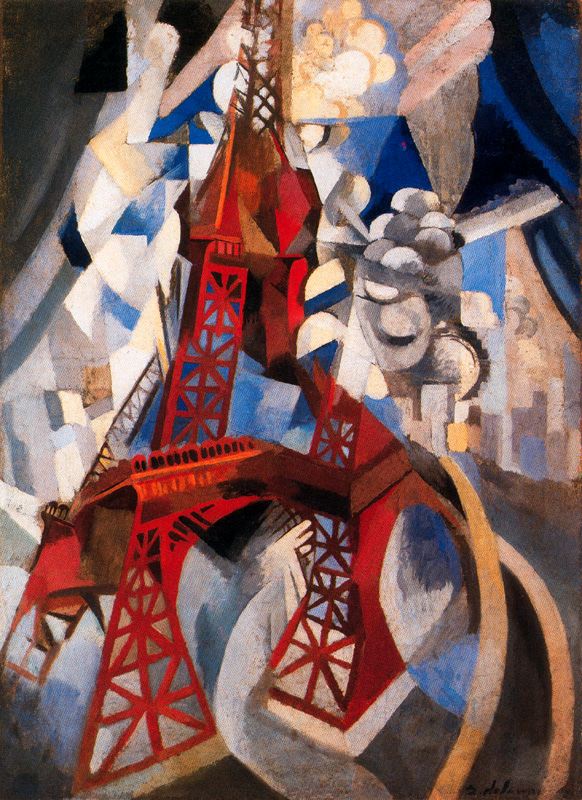
Champs de Mars: The Red Tower
1911/1923

The Three Graces
1912

Man with a Tulip or Portrait of Jean Metzinger
1906