Showing posts with label Early Renaissance. Show all posts

Wednesday, May 18, 2011

Piero della Francesca (c. 1412 – October 12, 1492)

                                                                                                                           
The Madonna Della Misericordia
c. 1460

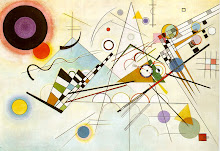
Piero was a mathematician as well as an artist. It might seem like an odd mixture, but artists were often carried into strange professions; Kandinsky, for example, was an economist and lawyer. And while it might be tempting to fly into Piero's works with an expectation of geometrical and mathematical accents, the works rest much more on the emotional depictions of their characters and symbolism of their themes. More so, Piero somehow transcended that rigidity of position and expression common in the men and women in Early Renaissance paintings through subtle articulations. 

Nativity
1470

Polyptych of St. Augustine
1460-1470

Burial of the Wood
1455

St. Benedict of Nursia
1445-1462

The Torture of the Jew
1452-1466

Stigmatization of St. Francis
1487

The Resurrection
c. 1450

Wednesday, April 6, 2011

Jacopo Bellini (c. 1400 – c. 1470)

                                                                                                  
Madonna with Child
c. 1465 

Bellini, most of whose works unfortunately have not survived the centuries, was one of the most influential artists, who helped bridge the Gothic and Early Renaissance styles. Now, it would be unfair to note that there were Early Renaissance painters who existed well before Bellini's birth, such as Giotto; still, it would be too simple to dismiss Bellini chronologically as his art illustrates a very strong movements towards what I could only simply term as a cleaner version of the Early Renaissance, which was not popularized until after his death (I think Madonna with Child most strikingly illustrates Bellini's revolution). 

Crucifixion

St. Anthony Abbot and St. Bernardino of Siena
1459-1460

St. John the Evangelist
1430-1435

The Apostle Peter
1430-1435

The Virgin and Child Adored by Lionello d'Este
c.1450

Thursday, March 24, 2011

Giotto di Bondone (c. 1266 – January 8, 1337)

                                                                                                                        
Scenes from the Life of Christ: 9. Raising of Lazarus
1304-1306

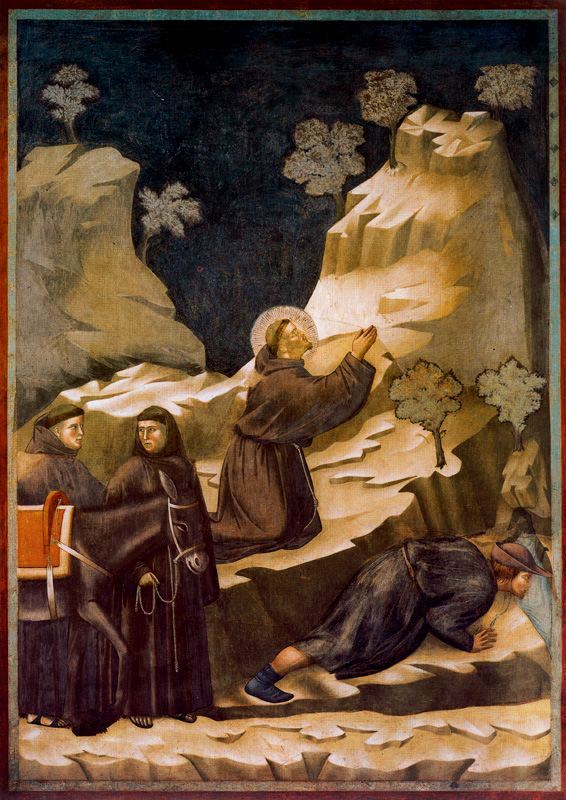
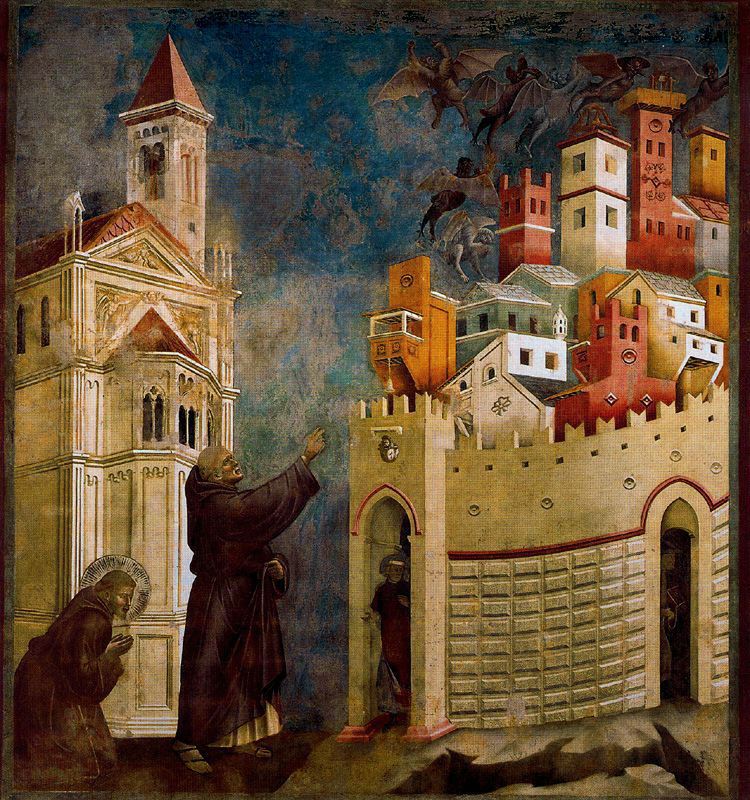
I love the Early Renaissance so much because of artists such as Giotto di Bondone. Those artists preserved, at least to some extent, the powerful and florid depictions that characterized Gothic art (in fact, the Early Renaissance (or portions of it) are often referred to as Late Gothic). Bondone's art was highly lauded in his lifetime, though his personal appearance was not quite applauded. On the latter point, it's interesting how much an artist and his art are, in the minds of appreciators, conceptually indivisible, when they are often separated by leagues. I especially love Bondone's depictions of animals, which are beautifully quaint. 

The Miracle of the Spring
1297-1300

Joachim's Sacrifice
1302-1305

The Expulsion of the Demons from Arezzo
1295-1300

Lamentation over Dead Christ
1302-1305

Tuesday, March 8, 2011

Domenico Ghirlandaio (1449 – January 11, 1494)

                                                                                                
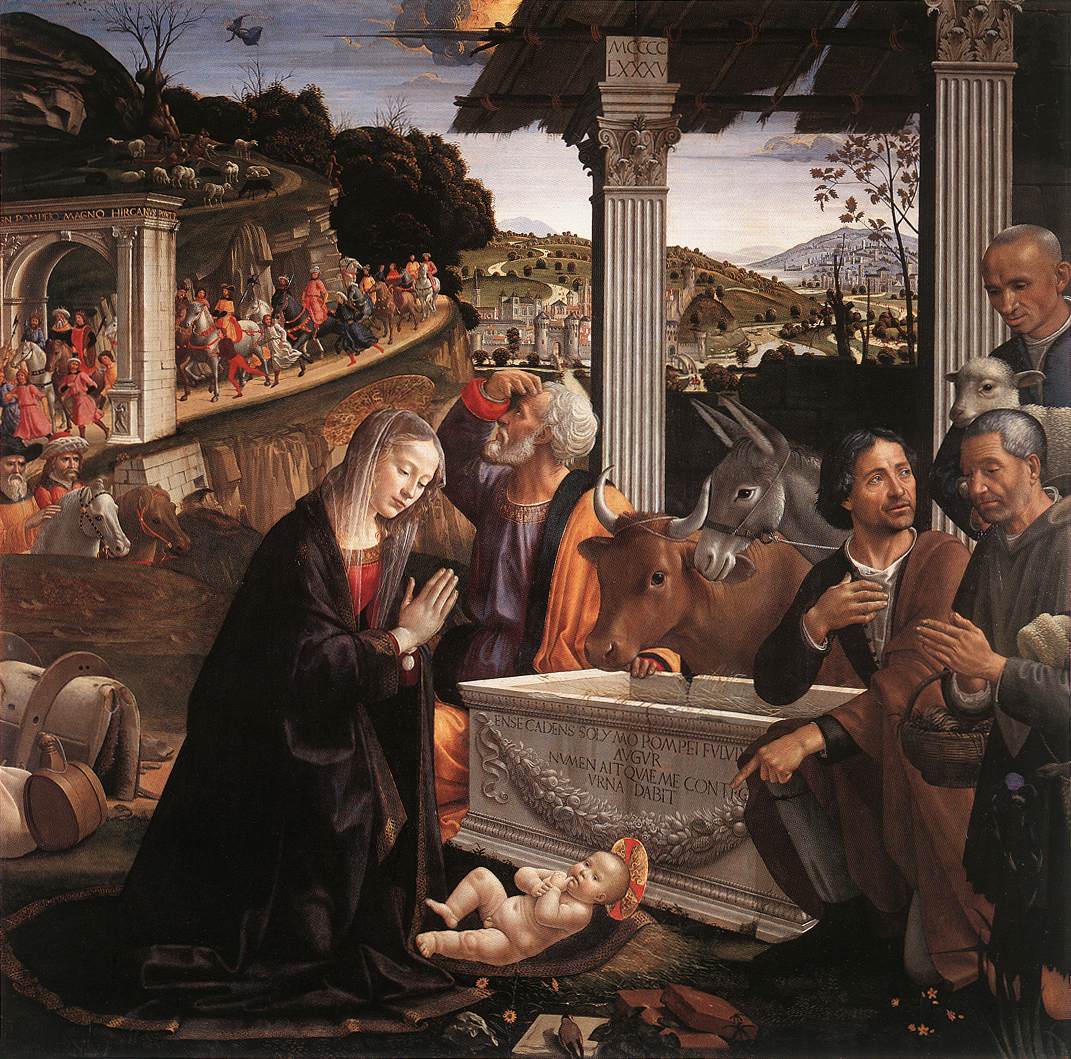
Adoration of the Shepherds
1482-1485

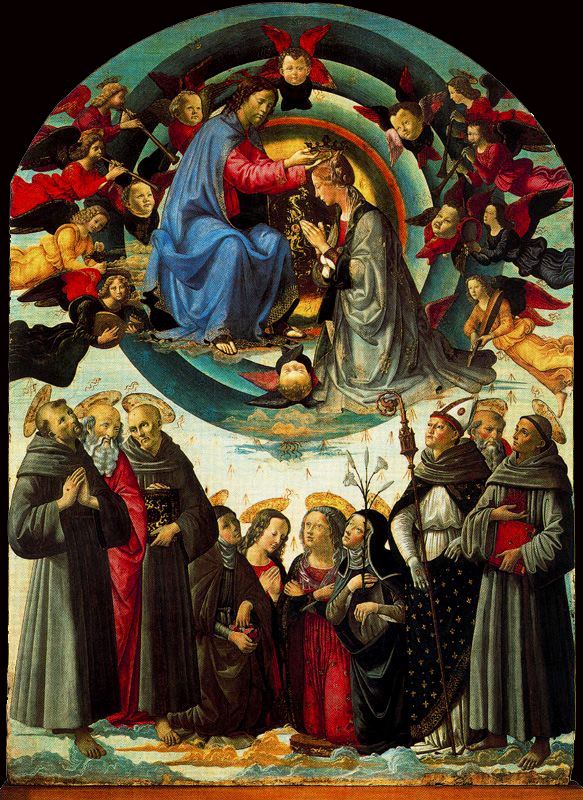
Take a breath ... Domenico di Tommaso di Currado di Doffo Bigordi (he is called Ghirlandaio, translated as garland-marker, because his father was a well-known Goldsmith, who made garland shaped jewelery) was one of the most influential painters of the Early Renaissance. His renown was strong enough in his lifetime to attract Michelangelo as a pupil, though it was most likely for a short time that Ghirlandaio taught him. While he lacked the ability to capture facial expressions, his characters are still beautifully differentiated in terms of types of faces, though nearly ubiquitously calm. And his environments are often lively and full of wonderfully symbolic depictions. 

Decoration of the Sala del Gigli
1482-1484

St. Jerome
1480

Coronation of the Virgin
1486

Thursday, February 17, 2011

Paolo Uccello (1397 – December 10, 1475)

                                                                                              
St. George And The Dragon
1460

Some news! Recently I got an email from Cate Newton, over at Online Courses, which informed me that I made the top 5 of a list of the best 50 art blogs on the net (click on the word list to check out the article). Obviously, I'm very flattered that they recognized this blog and thank them for the notice. 

Now, a few quick words on Paolo Uccello, the great Early Renaissance painter. Uccello is one of the Renaissance painters who most evinces the strong influence that Gothic Art played on the future period. Whereas some Early Renaissance painters, such as Botticelli, had moved considerably away from many of the  aesthetic choices of Gothic Art, Uccello utilized a lot of Gothic devices and fashions, which created a sense of transition in his art works between Gothic Art and the matured works of the Renaissance. 

Scenes from the Life of the Holy Hermits
c. 1460

The Hunt in the Forest
1460

Niccolò da Tolentino Leads the Florentine Troops
1450

Friday, December 10, 2010

Sandro Botticelli (c. 1445 – May 17, 1510)


Fortitude
c. 1470

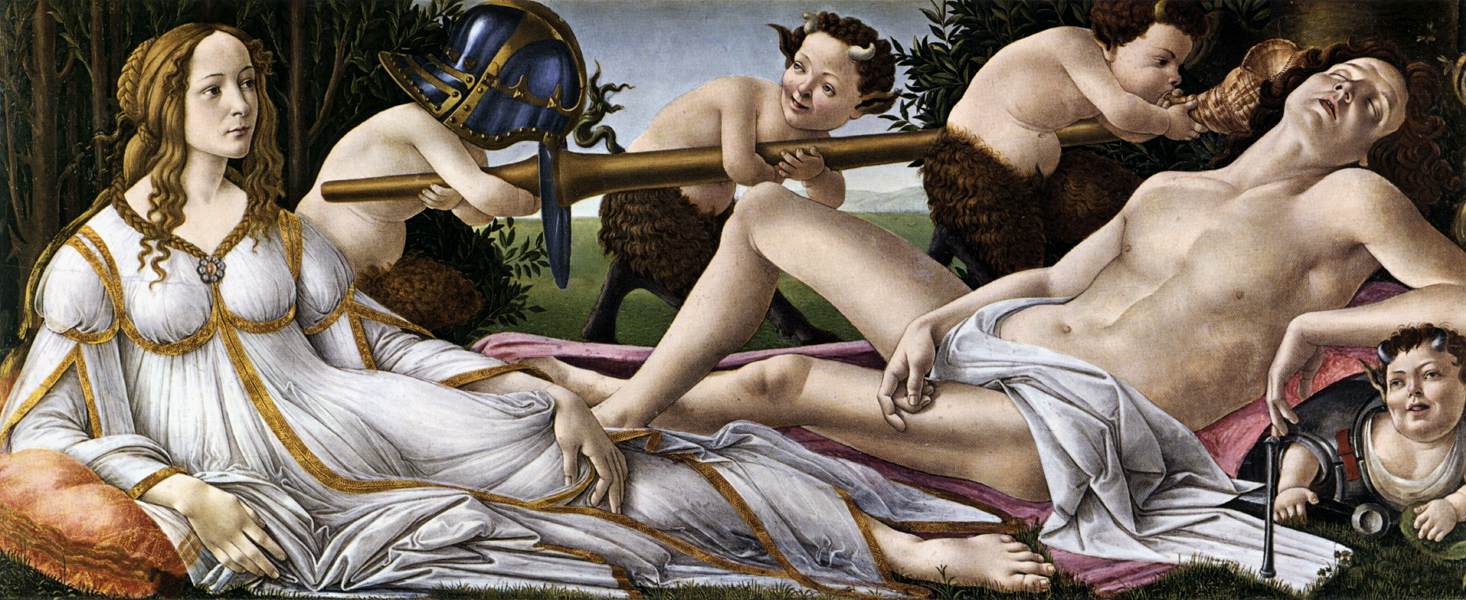
Botticelli was a tremendous figure in the Renaissance, especially in its most important and formative years. And he's often cited as the premier artist of that lengthy period in European history. His most famous pieces are The Birth of Venus and Primavera; but, since I don't much like posting the ubiquitous, I've tried to seek out some of the less common, yet still stunning, works of Botticelli. 

Adoration of the Magi
1481-1482

Venus and Mars
1483

Cestello Annunciation
1489-1490