Showing posts with label Baroque. Show all posts

Monday, May 23, 2011

Giovanni Baglione (1566 – December 30, 1643)

                                                                                                                             
Divine Love
1602

Baglione was a very able painter, but it's his interaction with one particular contemporary of his that I find to be the most interesting aspect of his life. As you can tell, there are two versions of Baglione's Divine Love in this post. The second version, which is above, was created to be in competition with Caravaggio's Love Conquers All, though both were created for the same patron, Cardinal Giustiniani. The devil in the the second version is widely believed to be based on Caravaggio himself (and, by symbolic implication, some historians see this as bearing a charge of sodomy against Caravaggio). Following the track of these historians, this representation caused Caravaggio to write and circulate a defamatory poem about Baglione soon after the painting's completion. In turn, the poem so outraged Baglione that, in 1603, he filed libel charges against Caravaggio. Baglione won the case, and Caravaggio was sent to jail for a couple of weeks. The strange story culminated, ironically, with Baglione becoming Caravaggio's first biographer (though certainly not his most sympathetic). In terms of artistic merit, I think the feud was easily settled on the side of Caravaggio; in terms of character, I'd have to second the last sentiment. What do you think?

Divine Love
1602

The Virgin and the Child with Angels

The Ecstasy of Saint Francis
1601

Saint Sebastian Healed by an Angel
1603

Self-Portrait with Vanitas Symbols

Thursday, April 28, 2011

Annibale Carracci (November 3, 1560 – July 15, 1609)

                                                                                                                      
The Cyclops Polyphemus
1595-1605

Carracci is one of the great painters of the Baroque period, though not as well remembered as certain of his contemporaries such as Caravaggio and Rembrandt, yet many of those same contemporaries were admirers of his work, including the wonderful Rubens. What I like most about Carracci is his amazing ability to show the emotion of his characters, which is a quality especially evident in his religious pieces (e.g. Mocking of Christ).  

Self-Portrait in Profile
c. 1590 - c. 1600

Dead Christ

Butcher's Shop
c. 1580 

Hercules at the Crossroads
1595-1597 

Virgin with Child

Mocking of Christ
c. 1596

Self-Portrait
c. 1604 

Friday, April 1, 2011

Caravaggio (September 29, 1571 – July 18, 1610)

                                                                                            
Taking of Christ
c. 1598

Who can ever get tired of staring at the works of Michelangelo Merisi da Caravaggio? And his influence has been massive, touching upon, most directly, such greats as Rembrandt and Rubens. A quick glance at his paintings can easily announce where so much of his brilliance lies: in the shadows. In fact, the movement Tenebrism (derived from the Italian word, roughly meaning gloominess), which actually began with da Vinci, is often referred to as Caravaggism, because of Carvaggio's extremely strong influence on the movements scions. Influence, influence, influence.

David
1600

Jupiter, Neptune and Pluto
1597-1600

The Conversion of St. Paul
1600

The Conversion on the Way to Damascus
1601

St. John the Baptist
c. 1600 

Love Conquers All
1602

Monday, January 24, 2011

Rembrandt van Rijn (July 15, 1606 – October 4, 1669)

                                                                                                    
Self-Portrait
1659

One of the most important artists of the Baroque period, and often sited as the greatest painter of the Western tradition, Rembrandt's paintings are dark, extremely well-detailed and exceedingly emotive. As an interesting note, many of his paintings' authenticities are highly disputed. One of my favorites is his late self-portrait, posted above, which displays a growing set of tragedies resting on the great artist's brow; one reason of his melancholy was that Rembrandt, though a prolific and applauded artist, was constantly falling into financial problems, so much so that, when his lover, Hendrickje Stoffels, died in 1662, he was forced to sell his wife's, Saskia van Uylenburgh's, grave just to rent one for Hendrickje (his wife's death was another tragedy in Rembrant's life). 

The Sacrifice of Isaac
1635

Jeremiah Lamenting the Destruction of Jerusalem
1630

Philosopher in Meditation
1632

The Anatomy Lesson of Dr. Nicolaes Tulp
1632


Wednesday, December 1, 2010

Peter Paul Rubens (June 28, 1577 – May 30, 1640)

                                    
A greatly lauded painter and a favorite of mine, Peter Paul Rubens was a difficult painter for whom to just choose a few pieces out of so much greatness, but here are the ones that most caught my eye:

Fall of the Rebel Angels 
1618-1619

Perseus Liberating Andromeda 
1620s

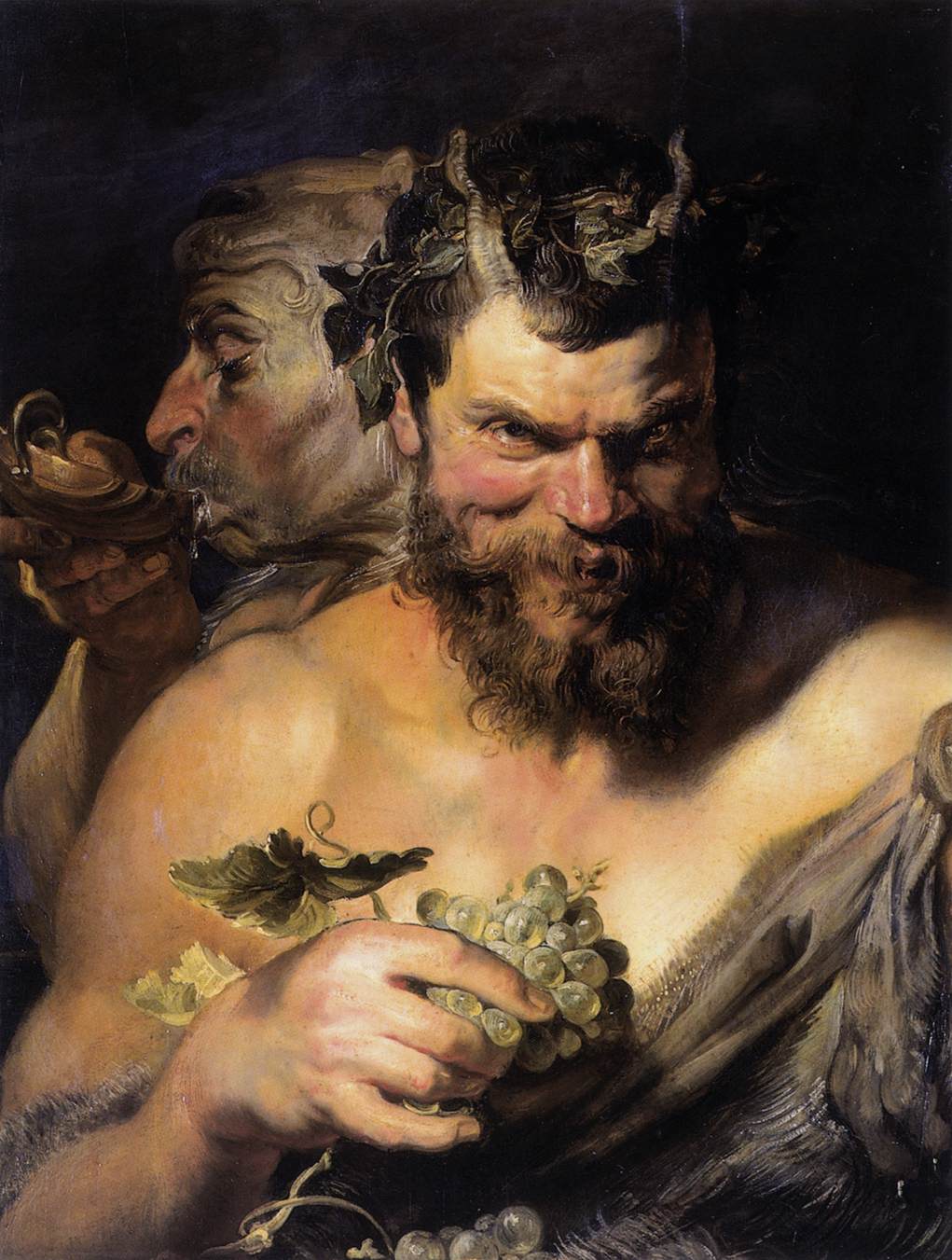
Two Satyrs
1618-1619

The Fall of Phaeton 
1605

Now for two personal paintings, the first is of Peter with his first wife, Isabella Brandt, and the second is of his daughter, Clara. The painting of Peter's daughter always seemed to me to be one of his most breathing works.

The Honeysuckle Bower
1609-1610

Clara Serena Rubens
1615-1616