Showing posts with label Mannerism. Show all posts

Monday, May 9, 2011

Cornelis Cornelisz of Haarlem (1562 - November 11, 1638)

                                                                                                                   
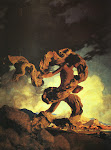
The Fall of Lucifer
1588

Haarlem was a superb Mannerist painter, who often treated subjects in a very satirical fashion, as he does in the painting below. But, though a wonderful painter of figures, there was often something lacking in his treatment of environments. The deficiency is somewhat explained in the fact that there was a long continuation of Mannerism in the North, when the Baroque period was already in full swing (compare, for instance, his near contemporary's work, Rubens', with Haarlem's). But, despite a slight anachronism, he was able to create massive and wonderful paintings. 

The Monk and the Nun
1591

Massacre of the Innocents
1591

Bathsheba
1594

Massacre of the Innocents
1590

The Fall of Man
1592

After the Deluge
1588

Friday, April 22, 2011

Correggio (August 1489 – March 5, 1534)

                                                                                                        
The Martyrdom of Four Saints
c. 1523

Antonio Allegri da Correggio was not extremely well-known or influential in his lifetime, but after his death his works began to percolate through the art world and influence painters. Correggio did not simply draw in one way throughout his life or tend towards one theme, but rather experimented successfully with all sorts of wonderful ideas and forms. I'm especially fond of his Portrait of a Young Man, which bears many of the characteristics that would later be adopted by the Realists.

Portrait of a Young Man
c. 1525

Ganymede
1531-1532

Antiope
1528

Venus with Mercury and Cupid

Allegory of Vice
c. 1532-1523

Allegory of Virtue
c. 1532-1523

Friday, March 25, 2011

Rosso Fiorentino (March 8, 1494 Florence - November 14, 1540)

                                                                                                  
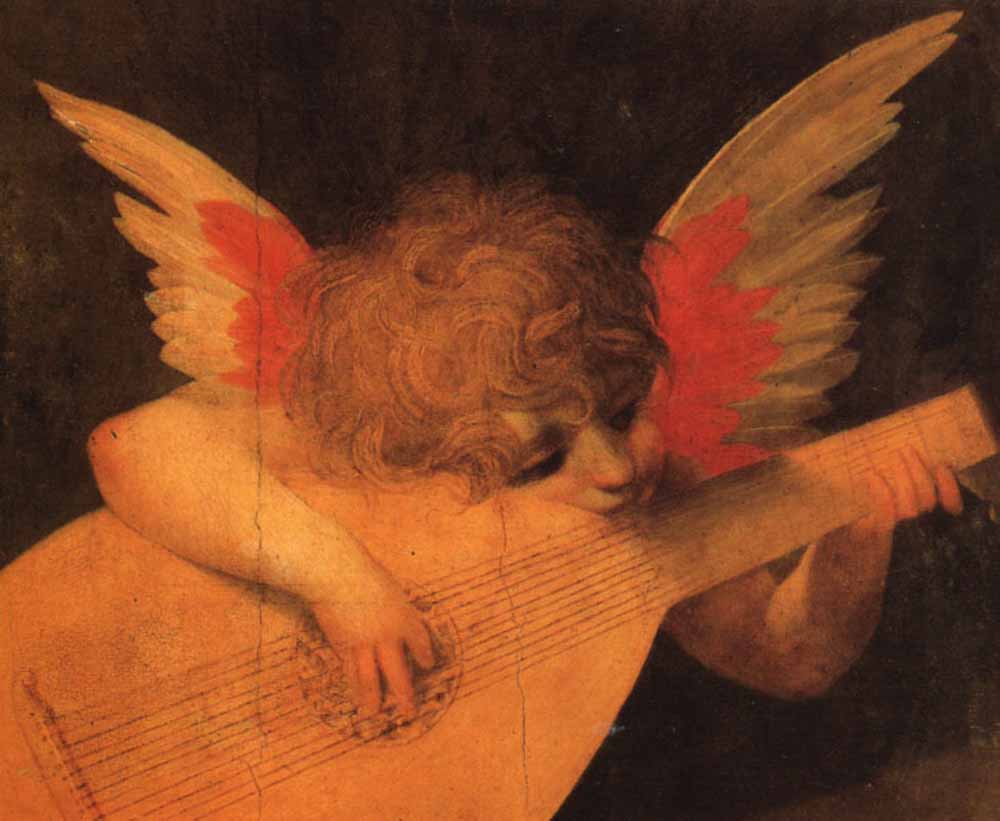
Musician Angel
1520

Rosso Fiorentino (Red-headed Florentine), Giovanni Battista di Jacopo, was one of the greatest Mannerists, yet he's not held in as great a favor as many other painters of the Renaissance. I suppose there's a stylized fashion in his works that somehow repulses critics. Personally, I think he's incredibly original, and was one of the most obvious precursors of the sublimely wondrous El Greco. And what powerful softness he could create in an image as well, especially in his famous piece at the head of the post, Musician Angel.

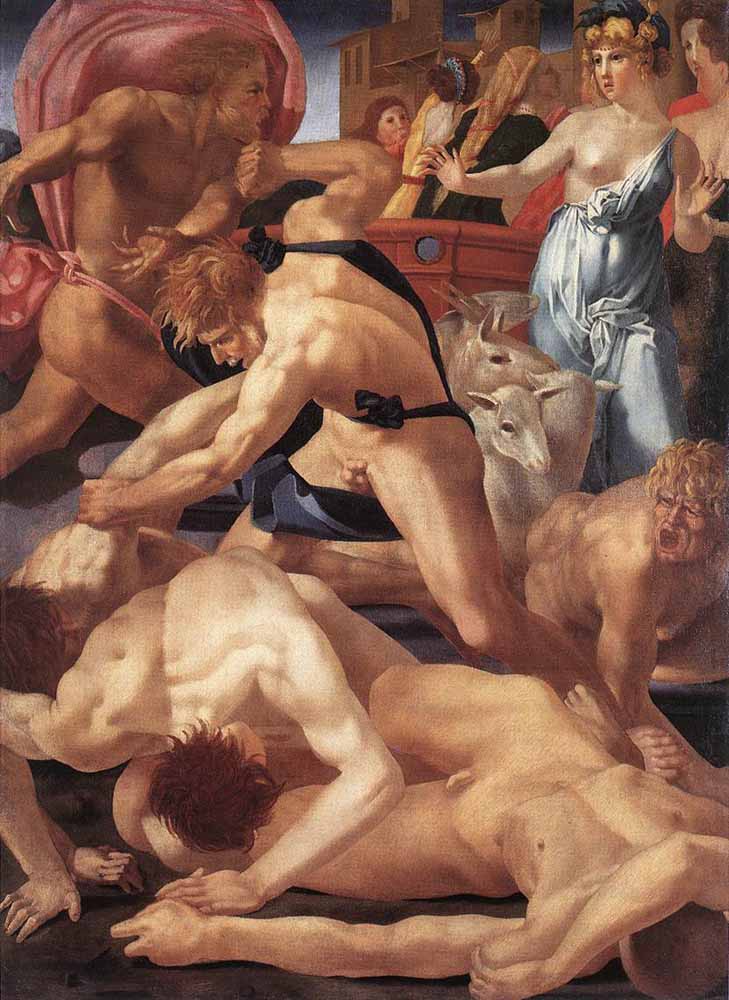
Moses Defending the Daughters of Jethro
1523-1524

A Young Man
1517-1518

Pietà
1537-1540 

Madonna and Child with Putti
1517

Deposition
1521

Wednesday, February 2, 2011

Parmigianino (January 11, 1503 – August 24, 1540)

                                                                                
Madonna of San Zaccaria
1530

Girolamo Francesco Maria Mazzola, or Parmigianino, is one of the most important artists of the Mannerist period. I'm a bit short on time, so I'll share two shallow thoughts with you. The first is that anyone with even a tiny understanding of Italian can figure out that his nickname, Parmigianino, means 'the small boy from Parma.' The second thought is that the painting Cupid Carving His Bow is one of the most disturbing pieces I've ever laid eyes on. Overall he's a magnificent artist.

Portrait of a Man
1523

Conversion of St. Paul
1528

The Mystic Marriage of Saint Catherine
c. 1527

Cupid Carving His Bow
1532-1534

Thursday, December 16, 2010

El Greco (1541 – April 7, 1614)

                                                                                          
The Tears of St. Peter
1587-1596 

There are many amazing Renaissance painters, but there are few that are so revolutionary as El Greco. Not only was his style absolutely unique and solitary in his lifetime, but the impact he had on post-Renaissance painters has been incalculable. The emotion, color and strange mysticism of his works are just wonderfully intertwining characteristics that always leave me with a sort of mystic impression, after the fact.

The Annunciation
1595-1600 

Julian Romero de las Azanas and his Patron Saint
1585-1590 

The Penitent Magdalene
1607