Showing posts with label Der Blaue Reiter. Show all posts

Saturday, May 4, 2013

Wassily Kandinsky (December 16, 1866 – December 13, 1944) II


Almost Submerged

1930

"Painting is an art, and art is not vague production, transitory
and isolated, but a power which must be directed to the
improvement and refinement of the human soul–to, in fact, the
raising of the spiritual triangle.

If art refrains from doing this work, a chasm remains unbridged,
for no other power can take the place of art in this activity.
And at times when the human soul is gaining greater strength, art
will also grow in power, for the two are inextricably connected
and complementary one to the other. Conversely, at those times
when the soul tends to be choked by material disbelief, art
becomes purposeless and talk is heard that art exists for art's
sake alone."

– Wassily Kandinsky


Park of St. Cloud with Horseman

1906


Park St. Cloud in Autumn

1906 


White Sound

1908 


Binz on Rügen

1901


Kochel - Lady Seated by the Lakeside

1902 


Shallow-Deep

1930 


Moonlit Night

1907 


Kochel Waterfall II

1902 

Sunday, March 27, 2011

Robert Delaunay (April 12, 1885 – October 25, 1941)

                                                                                                
Circular Forms
1930
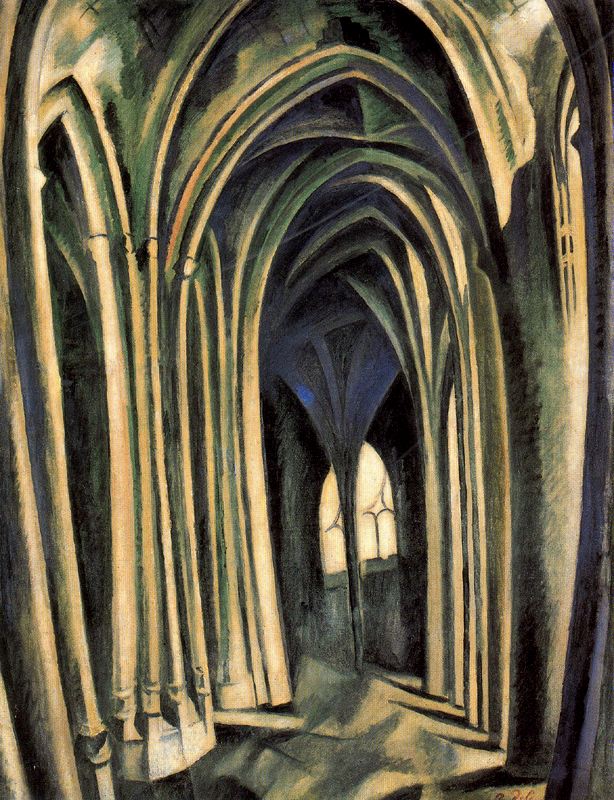
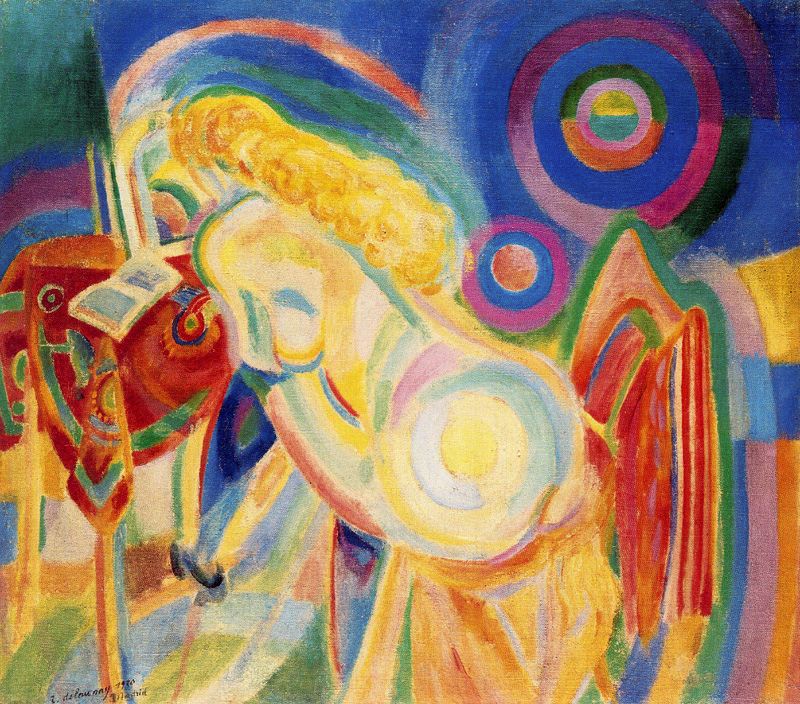
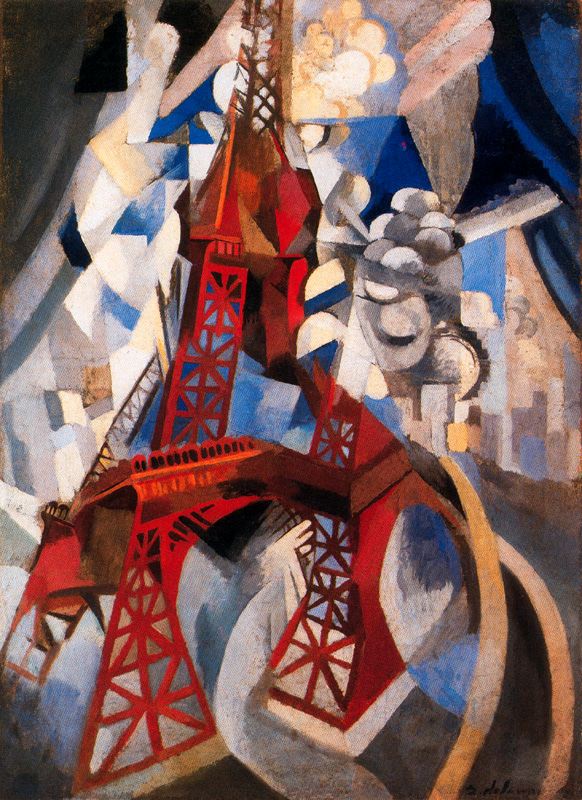
Delaunay was one of those turn-of-the-century painters that acted as a midwife for all those wonderful styles that developed in that period. His best known paintings are colorful and full of varying circles, a style no doubt influenced by Kandinsky: Delaunay was a part of the Der Blaue Reiter group.

The City
1911

Saint-Séverin No. 3
1909-1910

Nude Woman Reading
1920

Champs de Mars: The Red Tower
1911/1923

The Three Graces
1912

Man with a Tulip or Portrait of Jean Metzinger
1906

Wednesday, February 9, 2011

Lyonel Feininger (July 17, 1871 – January 13, 1956)

                                                                                    
Ships
1917

Feininger was a very talented Cubist and Expressionist, who's fallen a bit into obscurity these days. I feel his greatest talent rested in depicting living bodies of water despite the difficulties the style of Cubism brought to the representation of life. Besides painting, Lyonel was known for branching into comic strips as well as being an able pianist and composer, though, like his paintings, all the former have slid into oblivion. 

Jesuits III
1915

Architecture II (The Man From Potin)
1921

On the Bridge (Ober-Weimar)
1913

Blue Coast
1944

Thursday, January 20, 2011

Franz Marc (February 8, 1880 – March 4, 1916)

                                                                                          
Cow, Yellow, Red, Green
1912 

Franz Marc was one of the original founders of the Der Blaue Reiter group, along with Kandinsky. He was an extremely talented painter, who's work mostly concentrated on animals, representing them in a very spiritual fashions often with vivid colors. The paintings always seem somewhat alive to me, somewhat in motion–even more successfully representing mobility than the Futurists, who held the static representation of movement as one of their goals. His life was prematurely ended by a WWI bullet.

Deer at Dusk
1909

Fairy Animals I
1913

Cats
1909-1910

The Waterfall
1912

Monday, December 20, 2010

Wassily Kandinsky (December 16, 1866 – December 13, 1944)

                                                                                
Der Blaue Reiter
1903

Kandinsky, three of whose paintings hang perennially on the right side of the blog, is, arguably, the most important artist of the 20th century. There are a number of reasons why: he was a strong participant in two important Expressionist movements: Der Blaue Reiter, as a founder (see the namesake of the movement above) and the Bauhaus School, as a teacher; and he is  credited with producing the first abstract work in the art world (the term, Abstract Expressionism, was coined in reference to Kandinsky). And all of this commentary does not even begin to cover the amount of changes Kandinsky underwent within each style, always with an amazing sense of color and composition. 

Composition VII
1913

The painting above, Composition VII, is considered Kandinsky's magnum opus; he said that he put the most work of any of his paintings into that piece.

Couple Riding
1906

Glass Painting with the Sun
1910