Monday, December 6, 2010

Mark Rothko (September 25, 1903 – February 25, 1970)

                                                    
No. 1
1962

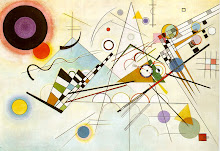
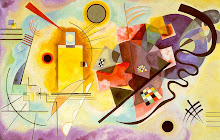
Mark Rothko is very well known for his pieces that deal with rectangles, usually, but not always, as a set of three rectangles placed one above the other (this style is known as Color Field). Two such pieces are shown directly above and below this paragraph. 

Earth and Green
1955

Rothko also experimented with various other styles, including different varieties of Abstraction and Expressionism. I've placed a few especially beautiful paintings below. 

Untitled
1939

Untitled
1944-1945

Underground Fantasy
1940

Sunday, December 5, 2010

Salvador Dalí (May 11, 1904 – January 23, 1989)

                                      
Cruxifixion (Hypercubic Body)
1954 

The very figurehead of the Surrealist movement (he had in fact once said, "I myself am surrealism"), Dalí was not without his critics. A common grievance, and one I share, is that he lacked a certain sense for composition. Despite this hiccup, the man's brilliance is quite stunning. 

Dali at the Age of Six
1950

Discovery of America
1959

The last painting is one of Dalí's not-so-Surrealist, quite-nearly-Post-Impressionist pieces.

Character Masquerading in Pinning Up a Butterfly
1965

Saturday, December 4, 2010

George Grosz (July 26, 1893 – July 6, 1959)

                                                                          
Kurfüstendamn 
1925 

After World War I, with Germany in tatters and the ineffectual Weimar Republic operating, New Objectivity (Neue Sachlichkeit) came to light. It was an incredibly pessimistic and misanthropic style that was in some ways a reaction to and serious critique of the Expressionist movement. George Grosz, the focus of this post, was one of the movement's chief artists (Otto Dix was the other).

Metrópolis
1916-1917 

Strasse in Berlin
1922-1923

The final painting is a bit strange, simply from the fact that it's not really strange at all. In fact, the piece bears a much greater similarity to Impressionism than it does to New Objectivity. It is perhaps Grosz's moment of calm in an exceedingly stormy life (I won't get into all the details of his difficult existence, suffice it to say that he was torn from his country by his loathing of Hitler and died falling down a flight of stairs from drunkenness).

High Dunes
1940

Friday, December 3, 2010

Claude Monet (November 14, 1840 – December 5, 1926)

                                                                                  
Houses of Parliament, London, Sun Breaking Through the Fog 
1904

Claude Monet, having just been provided glasses by an oculist and realizing their effect on his sight, threw them violently away, declaring, "If the world really looks like that I will paint no more!"

Monet is my favorite painter of the Impressionist movement. Yet, the little story above (which seems to be true, but certainly has an apocryphal flavor) raises the interesting question of whether novel art is still just as brilliant, if that novelty is created and maintained through a natural mishap, such as Monet's severe astigmatism. What do you think?

The Red Boats, Argenteuil
1872

The Gare Saint-Lazare: Arrival Of A Train 
1877

The Shoot
1876


The Japanese Bridge
1918-1924

Thursday, December 2, 2010

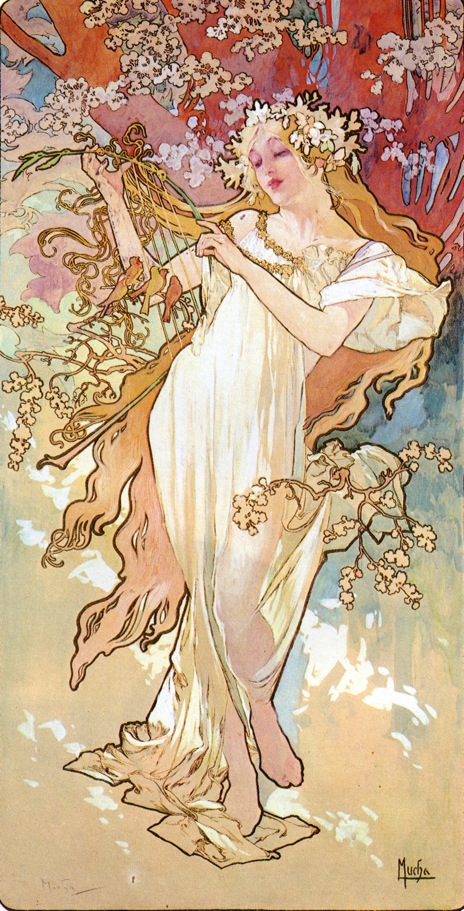
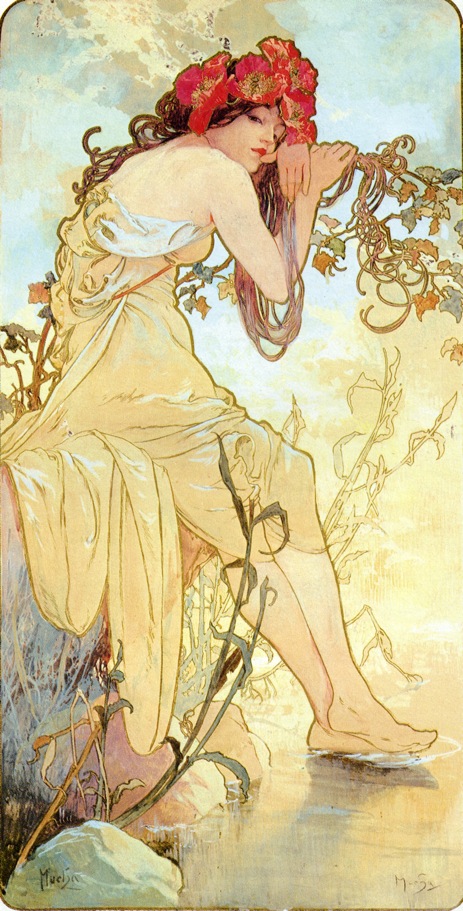
The Four Seasons by Alphonse Mucha (July, 24 1860 – July 14, 1939)

                                                                                                                                  
An unfortunately somewhat forgotten, but amazingly talented painter, Alphonse Mucha is the centerpiece of this post. Art Nouveau in general is not something that is as commonly lauded today as a whole host of other movements, with Kilmt acting as an exception, but is in my opinion one of the most wonderfully beautiful and highly stylized movements in art history.

The Four Seasons

Spring
1896

Summer
1896

Fall
1896

Winter
1896

Wednesday, December 1, 2010

Vincent van Gogh (March 30, 1853 – July 29, 1890)

                                            
Vincent van Gogh is one of the most revered painters in the Western canon. Yet only a handful of his pieces constantly show up up in searches and textbooks, which is why, in this post, I've endeavored to expose you to some of his rarer creations.  Actually there are so many passionate paintings out there that I've been forced to painfully pick and choose only a few, while biting into my lip; on a future date, I'll have to make a second post of his wonderful works, but, for now, I hope this suffices.

A Pair of Shoes
1886  

The Beach at Scheveningen in Calm Weather
1882 

Public Garden with Couple and Blue Fir Tree
1888 

 Girl in the Woods
1882 

The Sower
1888

Peter Paul Rubens (June 28, 1577 – May 30, 1640)

                                    
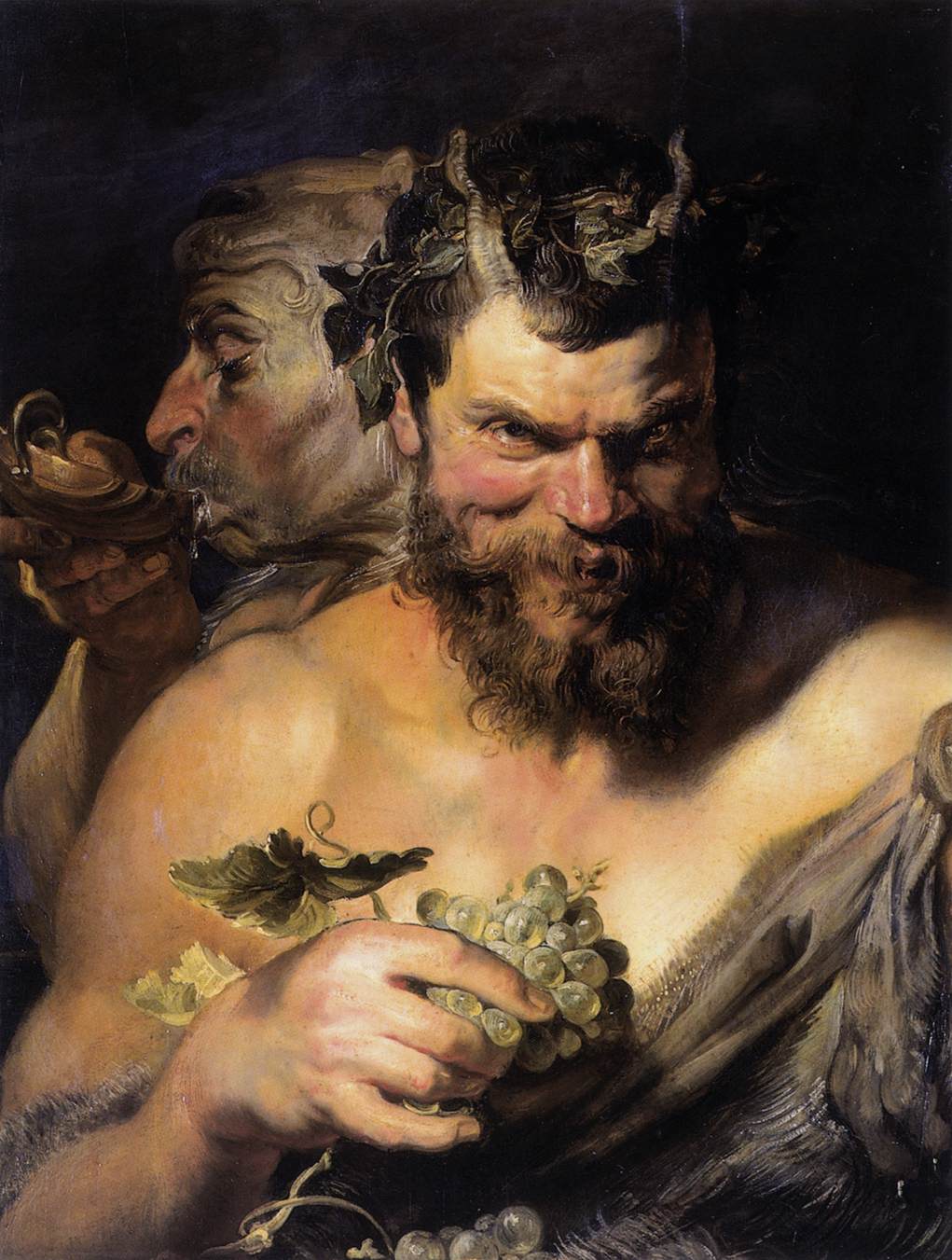
A greatly lauded painter and a favorite of mine, Peter Paul Rubens was a difficult painter for whom to just choose a few pieces out of so much greatness, but here are the ones that most caught my eye:

Fall of the Rebel Angels 
1618-1619

Perseus Liberating Andromeda 
1620s

Two Satyrs
1618-1619

The Fall of Phaeton 
1605

Now for two personal paintings, the first is of Peter with his first wife, Isabella Brandt, and the second is of his daughter, Clara. The painting of Peter's daughter always seemed to me to be one of his most breathing works.

The Honeysuckle Bower
1609-1610

Clara Serena Rubens
1615-1616