Showing posts with label Symbolism. Show all posts

Saturday, May 4, 2013

Wassily Kandinsky (December 16, 1866 – December 13, 1944) II


Almost Submerged

1930

"Painting is an art, and art is not vague production, transitory
and isolated, but a power which must be directed to the
improvement and refinement of the human soul–to, in fact, the
raising of the spiritual triangle.

If art refrains from doing this work, a chasm remains unbridged,
for no other power can take the place of art in this activity.
And at times when the human soul is gaining greater strength, art
will also grow in power, for the two are inextricably connected
and complementary one to the other. Conversely, at those times
when the soul tends to be choked by material disbelief, art
becomes purposeless and talk is heard that art exists for art's
sake alone."

– Wassily Kandinsky


Park of St. Cloud with Horseman

1906


Park St. Cloud in Autumn

1906 


White Sound

1908 


Binz on Rügen

1901


Kochel - Lady Seated by the Lakeside

1902 


Shallow-Deep

1930 


Moonlit Night

1907 


Kochel Waterfall II

1902 

Friday, May 3, 2013

Elihu Vedder (February 26, 1836 – January 29, 1923)


Head of Minerva

1896

Vedder was a talented and interesting Symbolist painter with strong Pre-Raphaelite influences, yet he was also, I think, a bit generic. Still, there is a sort of excellence in his genercism, as he often seems to approach novelty, in theme or style, though never quite reaching it. I would write more about Vedder, but, frankly, his life, as far as I know it, was not filled with many noteworthy moments, outside of mentioning that he was also a poet (honestly, not a very good one). But, while Vedder may have had an uneventful life and produced somewhat generic art, there is a quality that transcends the plain in his works, and makes him an artist of worth–and perhaps it is that which I find so interesting about him. 


The Questioner of the Sphinx

1863


Japanese Still-Life

1879 


Fisherman and Mermaid

1888-1889


Roman Model Posing

1881 


The Last Man

1891


The Cup of Death

1885 

Thursday, May 26, 2011

Jean Delville (January 19, 1867 – January 19, 1953)

                                                                                                                                 
The Idol of Perversity
1891

Delville, for me, exudes the early 20th century unlike any other artist; and, incredibly, he began to do so from the anachronistic perch of the 19th. But it's not just a representation of a zeitgeist, presaged or not, that makes Delville great, but its his absolutely unique style that I could only define as one of hyper-sensuality (he was a Theosophist, though I never understood by that group was so lascivious in their arts). And it should go without saying that Delville died unappreciated, and has only recently undergone a revival, reevaluation, recognition or whatever you'd like to call the perverse act of recognizing an artist after the comfort of a half-century's repose, at which time an artist's corpse can hardly restrain its excitement from all of the accolades.  

Satan's Treasures
1895

Orpheus
1893

The School of Silence
1929

Parsifal
1890

The Love of Souls
1900

Mysteriosa or Portrait of Mrs. Stuart Merrill
1892

Wednesday, May 4, 2011

Henri Martin (August 5, 1860 - November 12, 1943)

                                                                                                                     
Olive Trees by the Sea

The posts a bit late today, but better late than never. Anyway: Martin: Martin was never one to create a revolution in the art world, but he was a painter that consistently created wonderful pieces. It seems almost condescending to say of Martin that he was a capable artist, because capability isn't enough to make art, but, among greats such as Gauguin and van Gogh, he doesn't quite stand out. Yet there is a wonderful beauty to a great many of his works; a beauty, which was recognized among his fellow artists, but never quite in an uproar. 

Ducks on the Vert

Laborers Prepare the Vines in Quercy

Vase of Flowers
c. 1910

Silence
1894-1897

Self-Portrait
1912

Wednesday, April 20, 2011

Ilya Repin (August 5, 1844 – September 29, 1930)

                                                                                                            
A Shy Peasant
1877

There is a very special quality in the paintings of Repin. It's difficult for me to define that quality, and I want to say rather simply that it's magically beautiful, but that's not a cogent analysis. Still, Repin has survived with an intact reputation since his first entry into wide-acclaim. Perhaps that part of his work that most speaks out is a very goodly reflection of Russian spirituality (something reflected brilliantly in the words of writers such as Dostoevsky and Chekhov). 

Leo Tolstoy in the Forest
1891

Hunchback
1880

Sadko
1876

Fisher-Girl
1874

Saturday, April 9, 2011

George Frederic Watts (February 23, 1817 – July 1, 1904)

                                                                                                    
Choosing
1864

Watts is a great artist who doesn't quite fit into any single group in the 19th century. Certainly his art was often very much in the style of the Pre-Raphaelites, influenced strongly by Rossetti. Yet many of his pieces displayed a strong–ultimately dominating–character of Symbolism. It is in fact as a Symbolist that he had the greatest impact, being one of the first artists to experiment in that mode. Just look at The Minotaur, and see how much longing and realism is put into a beast that has almost constantly been displayed as a sinewy monster. What strange and great art. 

The Dweller in the Innermost
1885-1886

The Infancy of Zeus
1896

Hope
1885-1886

Endymion
c. 1870 

The Minotaur
1877-1886

Wednesday, March 9, 2011

Gustave Moreau (April 6, 1826 – April 18, 1898)

                                                                                                            
Saint George
1890

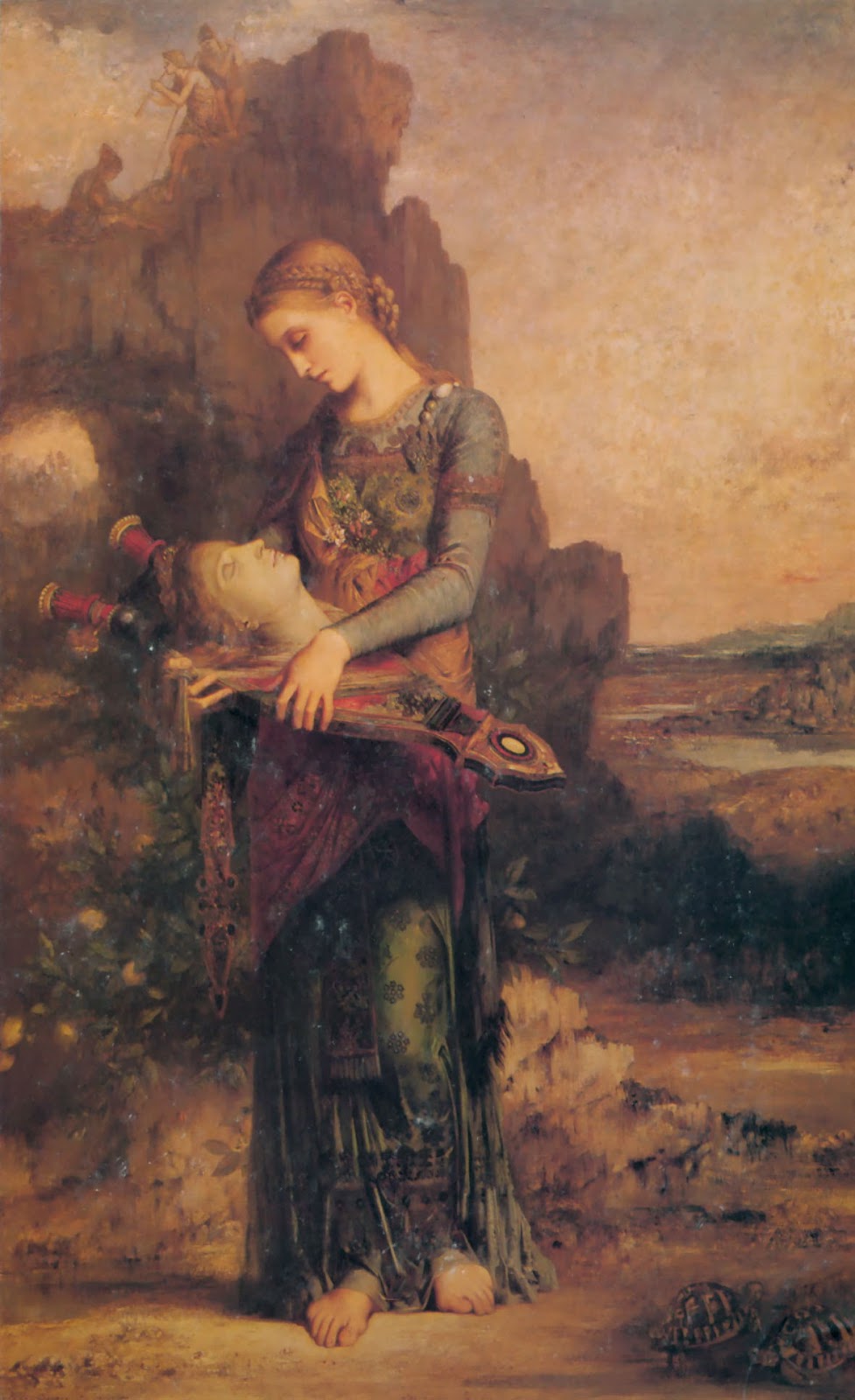
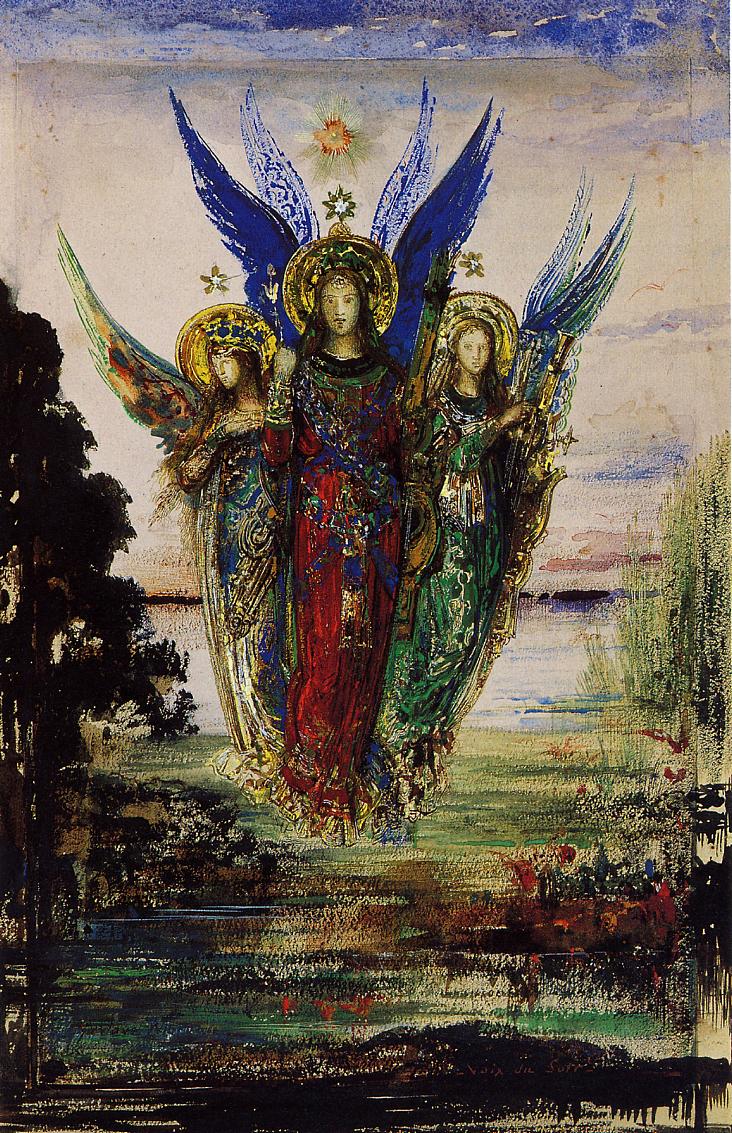
Moreau was one of the most influential and highly regarded Symbolists during his lifetime. And he's never quite fallen out of the public's appreciation. It's difficult to define his works under the aegis of a couple of characteristics, but I will say that my favorite paintings of his are full of those florid details that often characterize Symbolist works, such as in Galatea, which, by the way, is based off of one of my favorite myths of the love of Polyphemus (the Cyclops from the Odyssey) for the water nymph Galatea; you can read Theocritus' excellent poem on it here (can't vouch for the translation). And I would be remiss if I didn't add that Moreau at one point taught Matisse. 

Goddess on the Rocks
c.1890

Phaethon
1878

Galatea
c. 1896

Thracian Girl Carrying the Head of Orpheus on His Lyre
1865

Evening Voices
c. 1885

Thursday, March 3, 2011

Elmer Bischoff (July 9, 1916 – March 2, 1991)

                                                                                                    
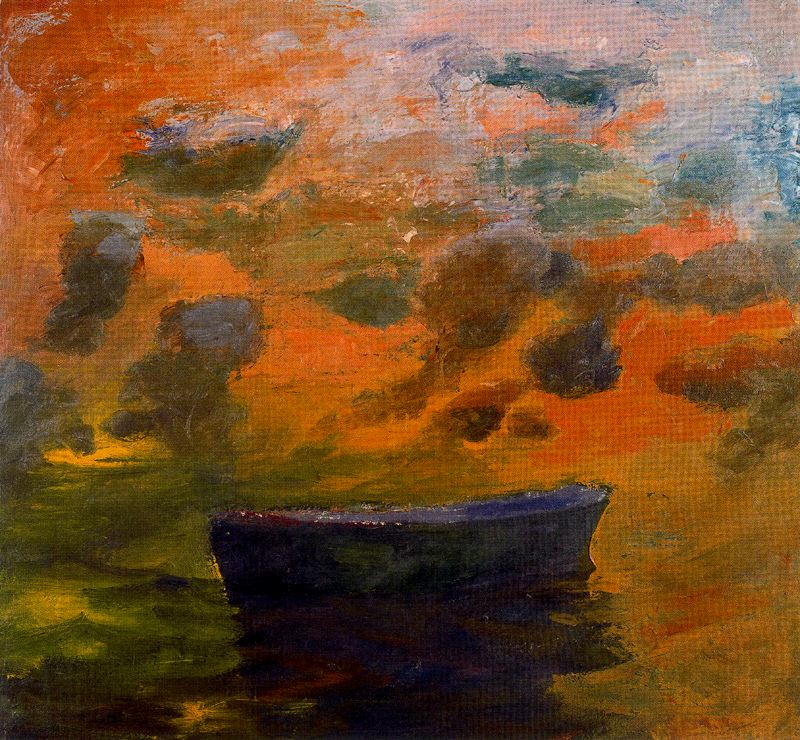
Boat and Clouds
1967

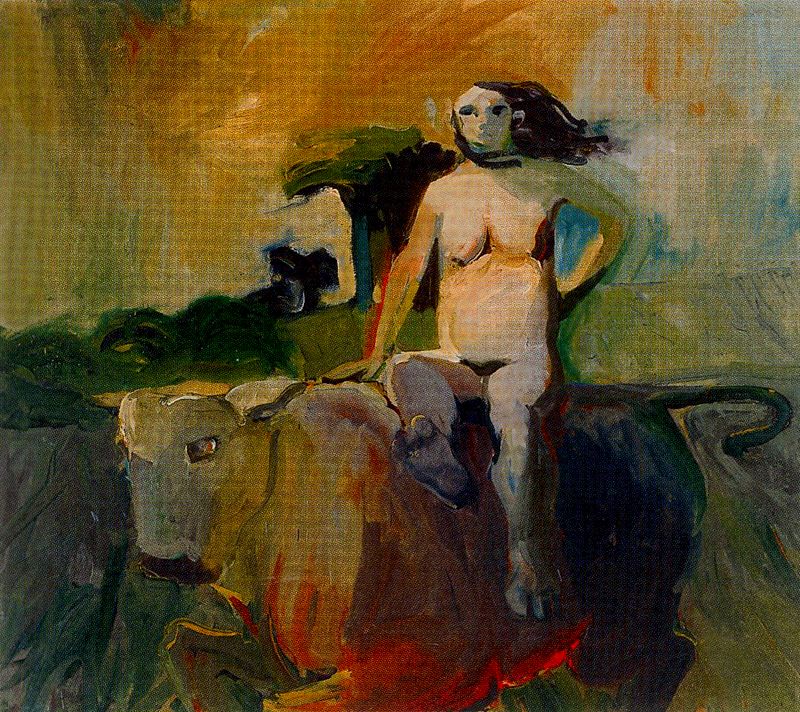
Here we have another somewhat obscure 20th century artist. I love Bischoff, but there is something somewhat derivative about his art; and, unfortunately, its most likely this second-hand quality that automatically obscures people's appreciation of the novelty and romantic strangeness of Bischoff's art. I've heard him referred to as a lesser Munch, but I'm not quite sure if this is accurate. I think he takes much more after Redon, but I wouldn't call him a lesser Redon for it–why should similarity be the death knell of artistic expression? 

Figure and Red Wall
1955

Europa
1957

Figure at Window with Boat
1964

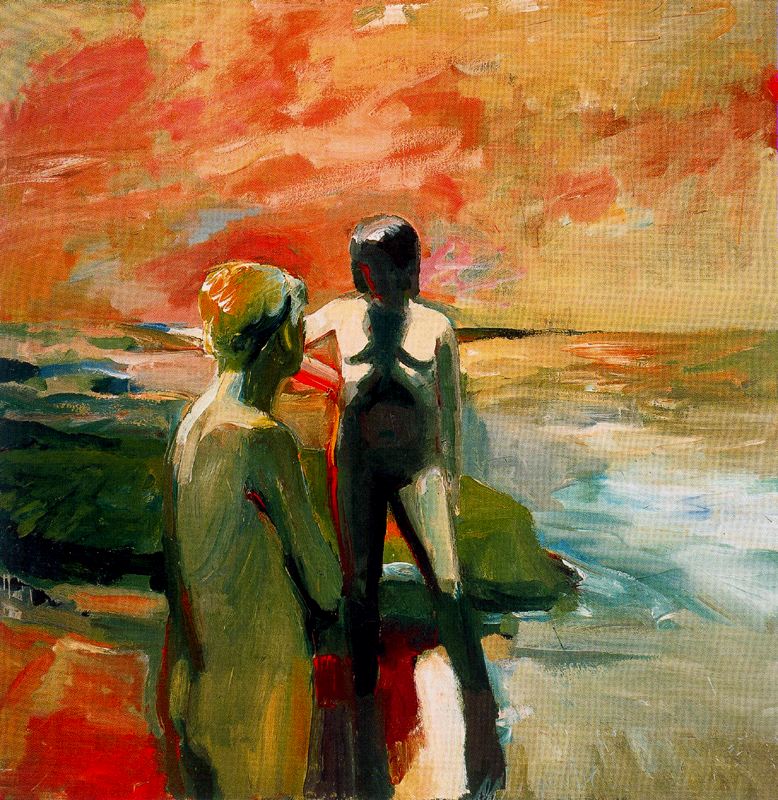
Two Figures at the Seashore
1957

Untitled
1937 

Blue Clouds
1963

And to cap this post off, I've posted some of Bischoff's Abstract works. 

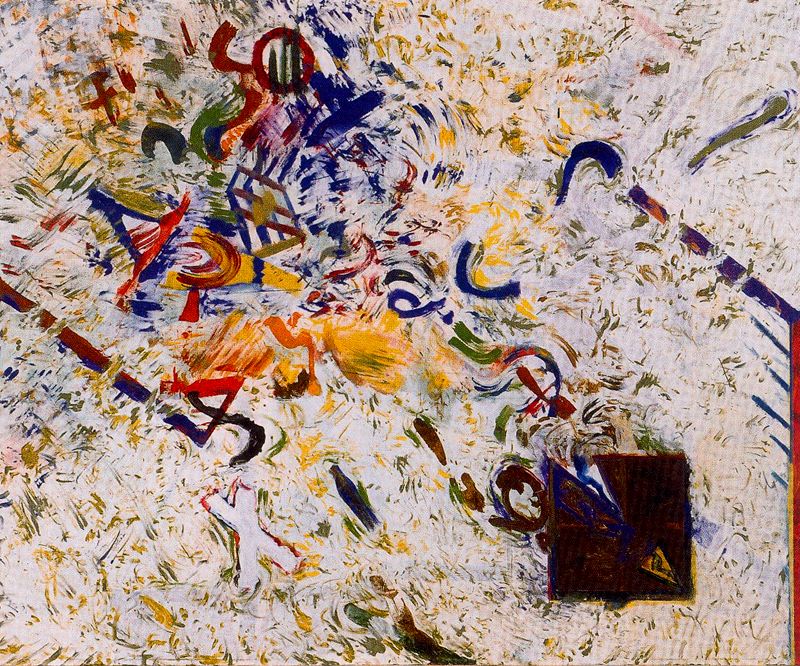
#51
1980

The Day of the Trifolds 
1962